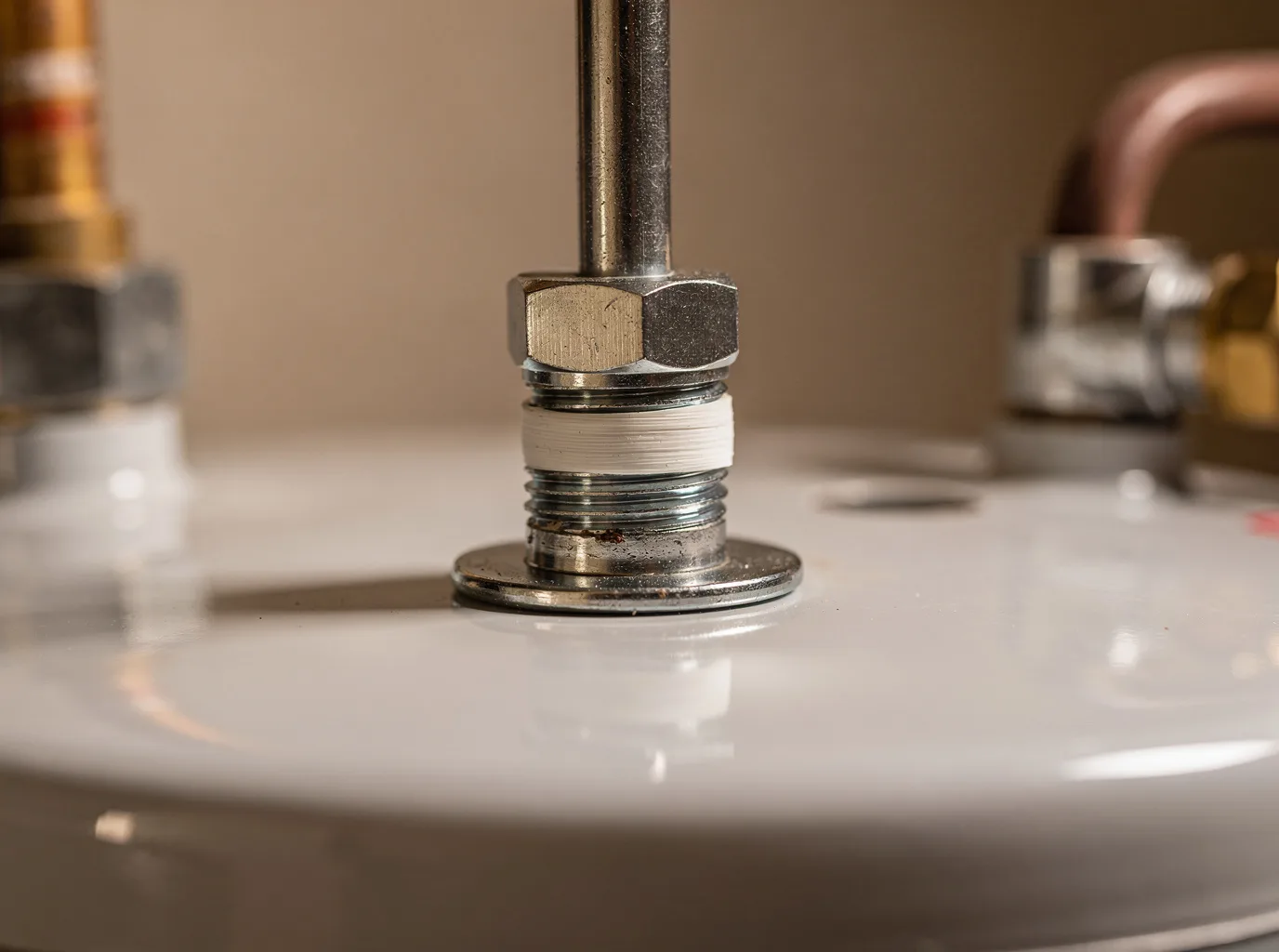
The anode rod is the quiet part of a tank water heater that most people never hear about. It is a long metal rod, usually magnesium or aluminum, that hangs inside the tank and corrodes on purpose so the steel tank does not.
Why it wears out
Every tank of water slowly eats the rod. Softened water and water with a lot of dissolved minerals eat it faster. Once the rod is down to its steel core wire, the water starts working on the tank lining, and rust spots and leaks follow. Swapping a rod costs a small fraction of a new heater, which is why checking it every few seasons pays off.
Picking the right rod
- Magnesium protects well and suits most municipal water.
- Aluminum-zinc helps when hot water smells like rotten eggs, a common issue with well water.
- Powered anodes use a small current instead of a sacrificial metal and do not wear down.
- Segmented rods bend into tight spaces where a full-length rod will not fit.
What the visit involves
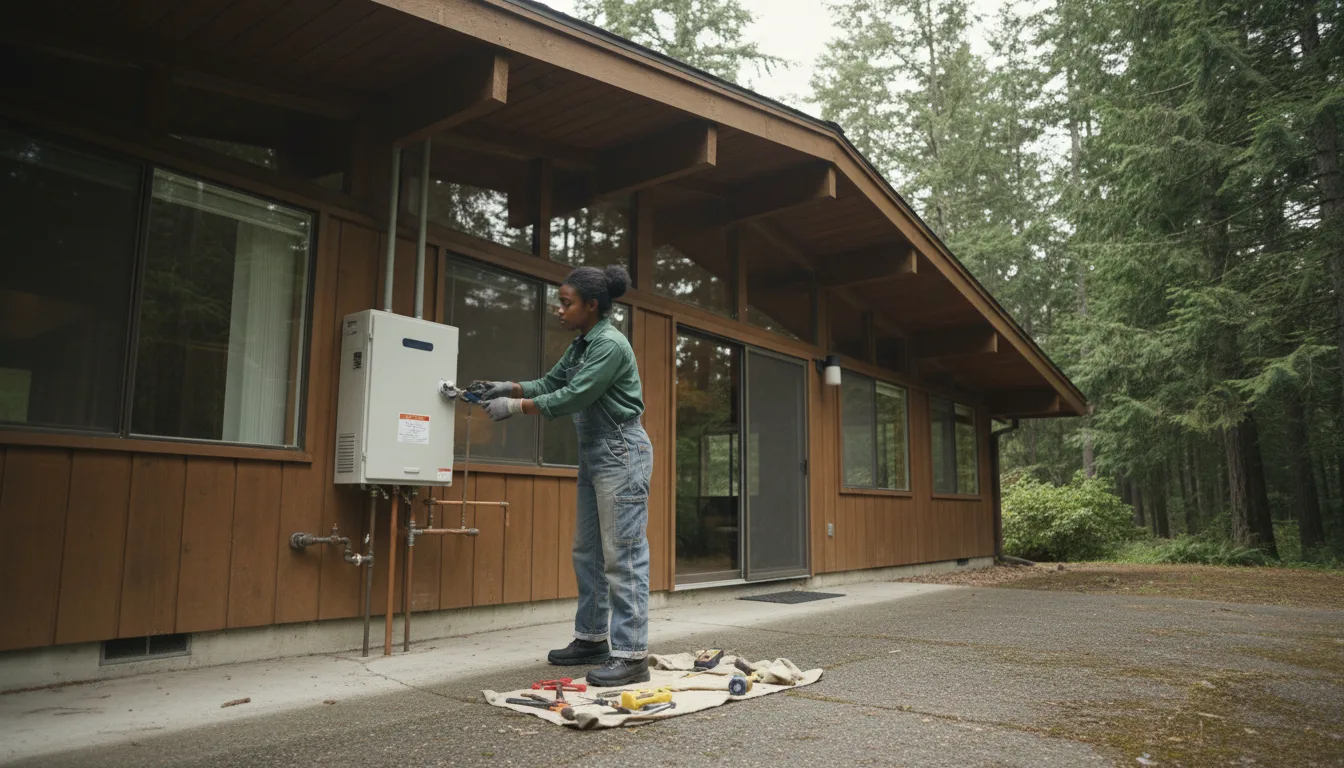
The plumber shuts off the water and power or gas, drains part of the tank and loosens the rod's hex head, which can take a breaker bar after a long stretch in place. They look at what comes out to judge the tank's condition, then fit the new rod with thread sealant and refill.
Booking through Sunvale Plumbing in Appleton, MN means one call, your tank details passed to an independent plumber, and the price agreed before the rod comes out.